Why Rust solo survival beats group play and how to hold a monument alone
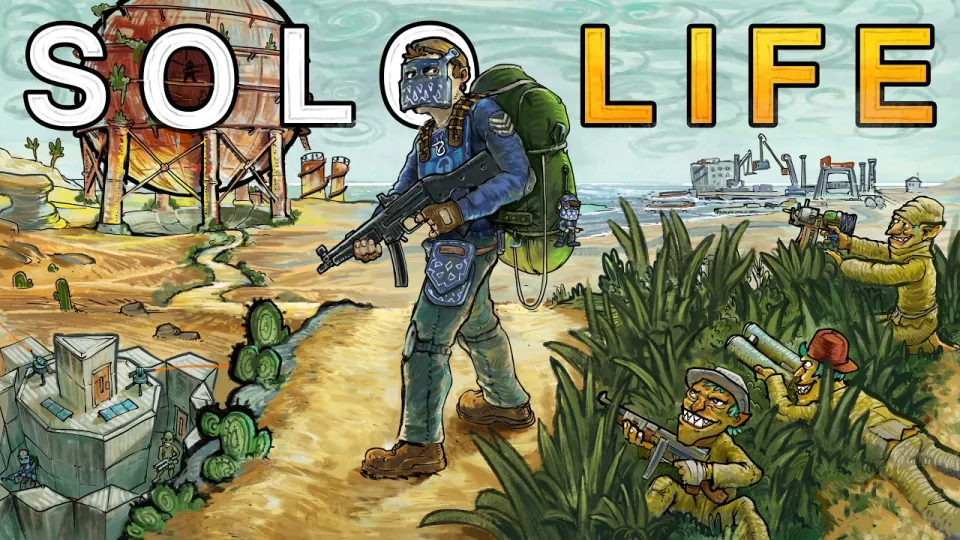
Video: Rust - THE SOLO LIFE V16
You can order the same kind of articles for your own video to boost it on YouTube and Google. Just message the Telegram bot @sat_sit_bot. Articles with your video embedded are written and posted by the bot itself — on popular topical sites (no ads). Your first 50 articles are free.
· based on the channel Blooprint
Key takeaways
- Blooprint's The Solo Life V16 shows one player holding an OP monument against several angry neighbors at once.
- Solo Rust rewards information and timing over raw numbers: one good scouting run replaces a four-man roam.
- The dome and cargo ship are top solo monuments because loot is vertical, compact and easy to abandon fast.
- A solo base should be cheap to rebuild, split into several loot rooms and never hold the whole wipe's worth of loot.
- Online raid defense as a solo works best from a second, hidden shooting position rather than the loot room itself.
- A friendly neighbor is a free alarm system: the best solo runs end with informal alliances, not only kills.
Rust solo survival works because the game punishes groups more than it punishes discipline: a single player who scouts, builds cheap and picks fights on their own terms can hold a monument, defend a base and even raid while outnumbered. The formula is simple — information, mobility and a base you can afford to lose — and it is exactly what Blooprint leans on in The Solo Life V16, where one player holds a contested monument while several neighbors try to push him out. Anyone who wants to try War Thunder can grab the free bonus through the sponsor link from the video: War Thunder sign-up bonus.
Why solo Rust is a different game from clan Rust
Solo Rust is not group Rust with fewer people; it is a different economy where time, noise and information replace manpower. A clan of four splits the same loot four ways and needs four sets of gear, while a solo keeps 100% of every crate, every kill and every raid — the only thing the solo cannot buy is redundancy. That trade is why so many players describe solo content as the most watchable form of the game: every decision is visible, every mistake costs a full kit, and a single good fight can fund an entire wipe.
The practical consequences are concrete:
- Gear fear is the real enemy. A solo who loses a full kit loses hours of progress, so the correct play is to run cheap kits early and only upgrade after the first successful raid.
- Noise is a resource. Every gunshot tells three neighbors where you are, so a solo should treat suppressed weapons and melee tools as economy items, not luxuries.
- Scouting replaces manpower. Ten minutes of watching a monument from a rock saves a wasted twenty-minute run and usually reveals who is farming it.
- Numbers still decide fights. A solo does not win 1v3 by aim alone; the win comes from forcing three separate 1v1s in a doorway, a corridor or a staircase.
Holding a monument alone: the dome, cargo and the case for vertical loot
Holding a monument solo means controlling the loot spawns long enough to farm them while staying close to an escape route, and the dome is the best classroom for that skill. Its spiral layout compresses players into predictable lines, the verticality gives a solo a free high ground, and the crate rooms sit close enough to the exit that a bad fight can be abandoned in seconds. The cargo ship works on the same principle: tight corridors, no long sightlines, and a deck that lets one player hear a whole boarding party before it arrives.
A workable solo monument routine looks like this:
- Approach from the least popular side, usually the one facing the map edge rather than the road.
- Clear the top first on the dome, because players farming crates below rarely look up.
- Take only what fits in one inventory — one gun, ammo, meds — and leave the rest for a second trip.
- Set a hard timer. If the monument is still hot after ten minutes, the loot has already been picked and the risk is now pure loss.
- Leave a stash nearby so a death costs a run, not a wipe.
Holding a monument is not about standing on it; it is about being the player who knows the timer on the crates and the exits better than the group that outnumbers them.
How to build a solo base that survives an online raid
A solo base survives by being boring to raid: cheap enough to rebuild in an hour, layered enough to cost the attacker more sulfur than the loot is worth, and split enough that one breach never takes everything. The classic solo mistake is a single tall tower with one loot room at the core — it looks strong and it concentrates every valuable item behind one wall.
Better solo building habits:
- Spread loot. Two or three small rooms with separate doors beat one armored core; a raider who blows the wrong wall gets tools and boxes.
- Keep the footprint modest. A 2x2 with honeycomb and a bunker is cheaper to repair than a 3x3 and draws less attention from roamers.
- Build near a monument but not on the road. Proximity to the dome or cargo is an advantage; a base on the main road is an invitation.
- Store the wipe fund separately. A small stash or a second tiny base holds the sulfur and the spare kits so a raid never ends the run.
- Replace doors after every fight. A broken door is a countdown timer for anyone who walked past it.
Defending and raiding as one player
Online raid defense as a solo is won from a second angle, not from the loot room. When the first wall goes down, the attackers expect the defender to be sitting behind the next one; a solo who instead shoots from a roof, a neighbor's hill or a flank window forces the raiders to turn, split and expose their backs. That is the pattern behind the scrappiest moments of a solo wipe — two players with one dream pushing a base and finding out that the owner has three firing positions and a respawn bag nearby.
Raiding alone follows the same logic in reverse:
- Pick targets by sound and by base size — a small base with a garage door usually means a solo or duo, not a clan.
- Raid at off-hours for the server and bring only the sulfur needed for the path you scouted.
- Take a raid base or a bag close enough to walk back in under a minute.
- Expect a counter-raid. The moment the first explosion lands, half the server knows the grid.
- Leave with the loot, not with the base. Demolishing everything is a hobby; extracting is the job.
Neighbors, accents and the social side of a solo wipe
A solo wipe is a social game whether the player wants it or not, and the runs people remember are the ones where a random neighbor becomes an unofficial ally. Friendly players function as a free alarm system: they call out roamers, share a door code after a bad night, and turn a two-front fight into a manageable one. The flip side is the group of neighbors who spend twenty minutes hunting one solo — that is time they are not farming, and it is often the solo's best window to hit their base.
The habits that make this manageable:
- Talk first in local voice when the fight is not yet committed; a five-second conversation saves a kit.
- Remember names and base locations; a mental map of the grid is worth more than a scope.
- Never trust a neighbor with the location of your stash, only with your front door.
- Accept that some servers are simply hostile — a wipe where every encounter is a fight is a signal to move grid, not to quit.
Common solo questions answered
Solo players keep asking the same things, and the answers are mostly about sequencing rather than skill. The first question is always progression: farm a monument for scrap, buy a tier-two workbench, then upgrade kits — not the other way around. The second is base placement: near a monument with an escape route beats a hidden base in the middle of nowhere, because a solo needs traffic to find fights and loot. The third is night: darkness is an advantage for movement and a disadvantage for vision, so use it to travel and stash, not to fight. The fourth is the group problem: a solo does not beat a clan in the open, only in doors, stairs and chokepoints where numbers cannot be applied at once. Finally, accept that losing a base is part of the format — the players who last a whole wipe are the ones who rebuild the same night instead of logging off.
Useful links
- War Thunder free bonus (PC and consoles)
- War Thunder mobile bonus
- Blooprint on Twitch
- Blooprint on Kick
- Blooprint on TikTok
The solo life verdict
The Solo Life V16 makes the case that Rust solo play is a discipline rather than a handicap: hold a monument with a timer, build a base you can lose, defend from a second angle and treat neighbors as either alarms or targets. The channel Blooprint has built this format over many episodes, and the emphasis on cheap kits, vertical monuments and quick rebuilds is what makes the runs watchable and repeatable. If you want to test the same instincts in a different theater, the War Thunder registration bonus is the link the video itself points to. Start with one monument, one stash and one rule: never fight a group where they can bring all their guns to bear.
Questions & answers
Can you actually hold a monument in Rust as a solo player?
Yes, but only for short windows. A solo holds a monument by arriving early, clearing the high ground first and leaving on a timer before the groups rotate in. The dome and the cargo ship suit this best because their layouts are vertical and compact, so one player can hear and control the approach routes.
How do you defend a solo base against an online raid?
Defend from a position the raiders do not expect — a roof, a flank window or a nearby hill — instead of sitting behind the next wall. Keep a respawn bag close, spread loot across several rooms and make the raid cost more sulfur than the loot is worth. Numbers only matter if the attackers can bring them to bear at once.
What is the best base size for a solo player?
A compact 2x2 with honeycomb and a bunker usually beats a large tower. It is cheaper to rebuild, draws less attention and lets you split loot across two or three small rooms so a single breach does not end the wipe. Proximity to a monument matters more than raw size.
Is it worth teaming up with a friendly neighbor during a solo wipe?
Often yes. A friendly neighbor acts as a free alarm system, calls out roamers and can turn a two-front fight into a manageable one. The limit is information: share your front door and your plans, never the location of your stash or your sulfur.
Source: Rust - THE SOLO LIFE V16 · Markdown version